Sport and Recreation Management
Sport and Recreation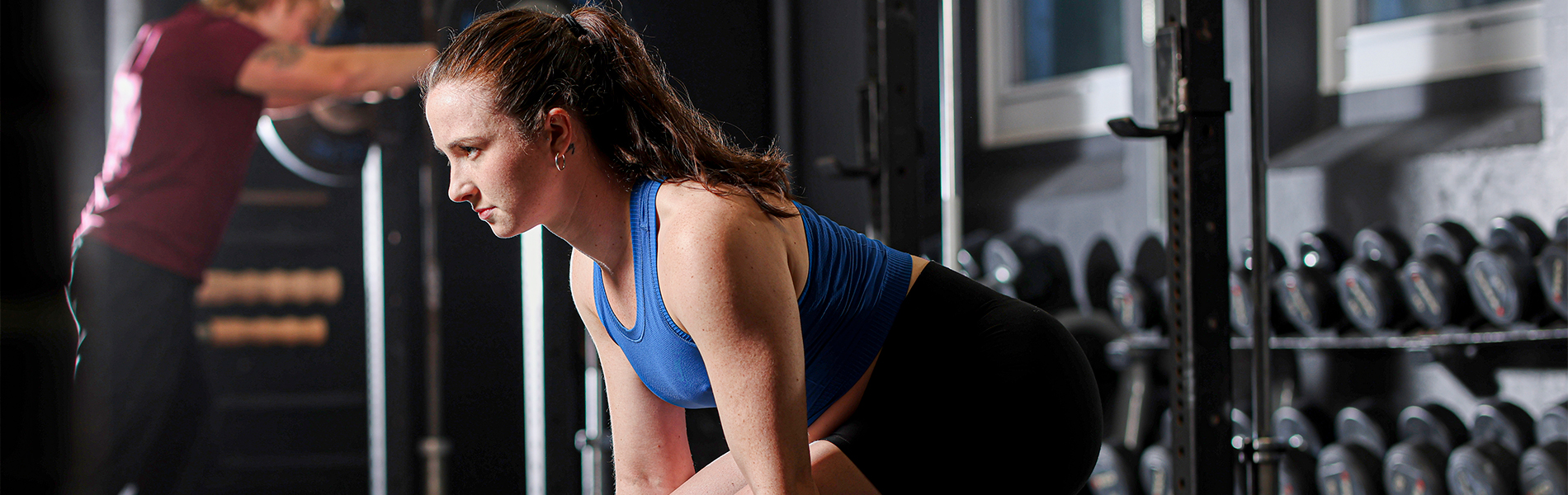
The Diploma in Sport and Recreation Management prepares students for careers in sport and event tourism, parks and recreation programming, facility management, athletic administration, and related fields.
Through coursework in sport and event tourism, sport marketing, health and wellness promotion, sport and exercise psychology, leadership, parks and recreation, and facility management, students develop the skills needed to succeed in sport management, parks and recreation administration, and health promotion. Students also gain valuable hands-on experience through a 150-hour industry internship.
Graduates are equipped to support the planning and delivery of recreation programs and sporting events, oversee scheduling and operations, and work collaboratively with senior sport and recreation management teams.
This site is protected by reCAPTCHA and the Google Privacy Policy and Terms of Service apply.
Thank you for reaching out!
Your information has been submitted successfully. A member of our team will be in touch with you soon.
September 2027
Prince of Wales Campus
Program Length
2 Years
Credential
Diploma, Sport and Recreation Management
Canadian Tuition
International Tuition
Canadian Applicants
Accepting Applications
International Applicants with a Valid Study Permit
Accepting Applications
Other International Applicants
Accepting Applications
Notes:
Don’t have the courses you need to get into this program? Visit our Academic Upgrading section to learn how to upgrade high school credits or get your high school equivalency credential (CAEC).
This program has degree pathways, giving you the opportunity to receive credit for your Holland College diploma when you continue your education. For a complete list of agreements, visit the Degree Pathways page.
| Partner Institution | Credential | Details of Agreement |
|---|---|---|
| Griffith | Bachelor of Business (Sport Management) | Graduates may complete a Bachelor of Business degree with any major in one and half years. |
| University of New Brunswick - Fredericton | Bachelor of Recreation and Sport Studies | Graduates receive up to 60 credits toward a Bachelor of Recreation and Sport Studies in Kinesiology. |
| University of Fredericton | Bachelor of Business Administration | Holland College Graduates with a minimum 60% average are granted up to 57 credits towards the completion of a Bachelor of Business Administration degree. |
| Acadia University | Bachelor of Community Development | Holland College graduates with a minimum average of 60% receive up to 60 credits toward a Bachelor of Community Development at Acadia University. |
| Mount Saint Vincent University | Bachelor of Tourism and Hospitality | Graduates receive up to two years of credit toward a Bachelor of Tourism and Hospitality degree. |
| University of New Brunswick - Saint John | Bachelor of Applied Management | Graduates with a 70% average receive two years of credit toward a Bachelor of Applied Management degree. |
| University of Prince Edward Island | Bachelor of Business in Tourism & Hospitality | Graduates with a 70% average receive up to 60 credit hours toward a Bachelor of Business in Tourism & Hospitality. |
| University of Prince Edward Island | Bachelor of Arts | Graduates with a 70% average receive up to 60 credit hours toward a Bachelor of Arts degree. |
SAFE-1005
An overview of the Occupational Health and Safety Act...
0
BUSI-1143
Successful completion of this course will equip students with a foundation of basic leadership skills. A special focus is placed on skills which relate to communication, teamwork, management functions, styles of leadership, motivation, staffing, training, delegating, and performance assessments.
3.00
CDEV-2260
Community development represents a type of service approach that is highly dependent on citizen participation. Community development aims to empower both individuals and local communities through involvement, education, skill development, and proposed changes in existing conditions. In this course, students develop essential practitioner skills such as research and planning, education, group development, facilitation and advocacy.
3.00
COMM-1010
Review and practice English grammar. Develop the ability to convey thoughts clearly and concisely, building professional written communications skills for a variety of workplace settings.
3.00
COMP-1000
Students learn productivity software and explore digital environments with practical applications for various workplaces and educational institutions. The main areas of focus include word processing, spreadsheets, presentation software, email and other electronic communication tools, various digital environments, and industry-specific applications.
3.00
KINE-1118
Developing a greater understanding of human behavior within the sport and exercise setting is an important asset for professionals working in related fields such as fitness instructing, athletic training, sport administration, coaching and recreation planning. The study of psychology examines influences on human behavior in relation to personality and social environments. In particular to sport and exercise, this course covers theories of motivation, the impact of stress on performance, the psychological benefits of exercise, strategies for promoting exercise adherence, and the role of mental skills for performance and well-being.
3.00
MKTG-1000
Learn the fundamentals of marketing and the major environmental factors influencing today's marketing environment. Discover how individual consumers, industrial and organizational buyers reach their purchase decisions. Develop an understanding of target marketing and examine the elements of the marketing mix.
3.00
MKTG-2241
Students explore public relations theory and practice including how public relations operate in organizations, its impact on the public, and its function in society. Professional development of the field; concepts, issues, and principles in the practice; and models and theories guiding the practice are also explored. Students apply course materials to public relations program planning and management by working on a variety of public relations projects.
3.00
MKTG-2244
Recreation and leisure services compete with limited resources. The more creative a recreation marketer is, the more successful their services may be. This course places focus on the promotion of sport and recreation products, services, and events. Students can expect to develop a marketing plan while examining topics such as marketing intelligence, the target market, and issues related to the development of a marketing mix.
3.00
NCPR-1001
A comprehensive two-day course offering standard first aid and cardiopulmonary resuscitation (CPR) skills from a certified trainer. As required by regulation, this course covers CPR and the management of other breathing, airway and circulation emergencies, as well as, the control of bleeding, treating shock, stabilizing fractures and dislocations, head and spine injuries, and more. Also, includes automated external defibrilators (AED). This certification expires in 3 years.
0.00
NCPR-1015
Students prepare for work-integrated learning by exploring and pursuing opportunities aligned with their professional interests and career goals. Students develop professional skills, examine workplace expectations and responsibilities, and establish learning goals to support successful work-integrated learning. Students secure opportunities, which may include multiple experiences or placement sites to meet program requirements.
0.00
NCPR-1120
This NCCP coaching certification contains a national curriculum with content that reflects the uniqueness of Aboriginal culture, values, and lifestyles. The training includes three modules 1. a holistic approach to coaching 2. dealing with racism in sport and 3. individual and community health and wellness.
0.00
NCPR-2020
Students build on and integrate program knowledge, skills, and professional competencies through work-integrated learning experiences. Students apply their learning while meeting workplace expectations, fulfilling professional responsibilities, and contributing to organizational goals. Work-integrated learning may occur through multiple experiences or placement sites that collectively contribute to the required 150 hours.
0.00
RECR-1052
Examine legal concepts and principles that exist within the sport and recreation industry. Students will examine aspects of negligence, liability, risk management, as well an introduction to criminal law, civil litigation, contracts, and policies. Discover contemporary and emerging issues within the fields of recreation and sport.
3.00
RECR-1110
As future professionals in this dynamic field, familiarity with the concepts, philosophical underpinnings, history, and the societal context of leisure, recreation and sport is key. In this course, students examine the role of public, private, and volunteer sectors in the delivery of leisure services. An understanding of the benefits of physical activity and sport are important aspects of this course.
3.00
RECR-1114
A key component within the leisure industry is the design and implementation of relevant programs in various settings. In this course, students examine the program development cycle and illustrate its application Further, students explore the phenomena of leisure, how humans engage and experience leisure, and how to facilitate an individual's experience of leisure.
3.00
RECR-1121
Explore how individuals experience leisure and examine the necessary steps to plan and create quality leisure experiences. Review leadership styles, strategies for managing participant behaviour, and explore different types of recreation activities. Learn the key elements of risk management to create safe sport and recreation activities. Examine activity development differences for various stages in the life cylce and plan activities based on various needs.
3.00
RECR-1144
Sport administration requires excellent administration and management skills, as well as specific attention to issues that are unique to sport. In this course, students develop familiarity with the structure of the international and national sport community as well as strong comprehension of the provincial sport system. Trends, and the role of sport in modern society, are reviewed, as well as the competitive path to achievement in sport.
3.00
RECR-1149
With focus placed on recreation, sport, and community, this course is designed to help students reflect on leadership theories and skills both personally and when working with others. Personal management skills and perspectives for enhancing communication, proactive thinking, and conflict resolution are explored, with particular attention given to leadership as it relates to group dynamics.
3.00
RECR-2240
This course introduces the fundamentals of recreation and sport service/provision for persons with a disability. Course activities include topics such as assessment, individualized programming, and coordination of related resources/services to provide optimal experiences for youth and adults with a disability.
3.00
RECR-2243
Gain an understanding of the requirements for managing a sport and fitness facility. Learn organization structure, staffing, daily operations, facility planning and facility design.
3.00
RECR-2253
Examine the impacts of sport and special event tourism on the economy and on society. Discover the components required for creating an event and learn how to develop an event from conception to delivery.
3.00
RECR-2260
This course will focus on the role of the fitness and recreation professional in facilitating personal health, health with others, and health in communities. Students will explore the holistic nature of health, thoughts around behaviour change, and stress. Additionally, students will become familiar with planning and organizing a wellness program based on developmental needs.
3.00
RECR-2390
Learn the adminstrative tasks associated with public recreation services such as contracting services, finances, budgeting, working with elected officals and committees, legal authority and jurisdiction, fund development, feasability studies, and master planning. Students will learn about growth and change in the park and recreation industry as well as the issues and challenges faced by managers in the public sector.
3.00
SOCY-2000
Explore sport, physical activity and recreation from a sociological perspective. Develop critical thinking skills while considering the social, cultural, political and economic structures of sport in contemporary society. Explore topics such as sociological theories of sport, social inequalitites, sport deviance, sport in the media, human behaviour, sport for development and future perspectives on sport in society.
3.00
Upon successful completion of the program, graduates will be able to: